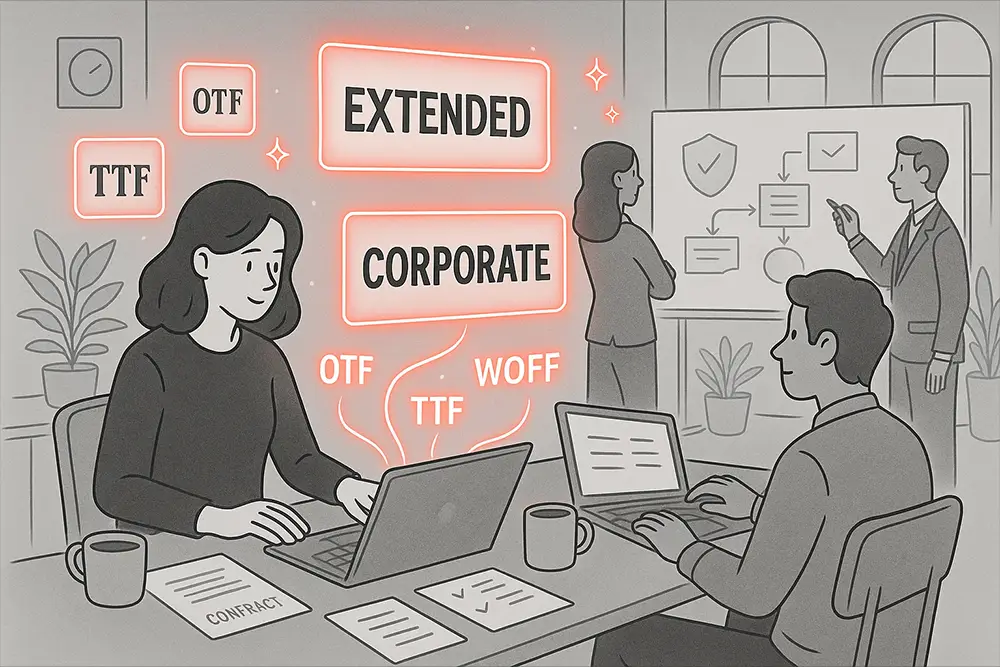
Font licensing often feels confusing—especially when you’re juggling multiple client projects or managing design teams. Freelancers usually assume a simple purchase is enough, while agencies face larger risks because they handle projects for brands with wider exposure. The truth? The wrong license can lead to copyright infringement, lost clients, or even legal disputes. That’s why in this guide, we’ll break down font licenses explained for freelancers vs agencies, using plain language, practical tips, and examples with fonts you can try right now.
Table of Contents
- Why Font Licenses Matter More Than You Think
- Standard License: Ideal for Freelancers with Personal Clients
- Extended License: Agencies and Growing Brands Need This
- Corporate License: Full Protection for Agencies and Enterprises
- Fonts That Show the Power of Proper Licensing
- From Our Desk: What We’ve Learned About Font Licenses
- Freebies to Test Before You Invest
- Empowering Conclusion
Why Font Licenses Matter More Than You Think
Fonts are intellectual property. Just like stock photos or music tracks, they come with usage rights. Buying a font doesn’t mean you “own” it—you’re actually purchasing a license to use it under specific conditions.
- Freelancers often buy fonts for personal or client projects, assuming standard licenses cover all use cases.
- Agencies work with multiple clients and distribute creative assets at scale, so they need extended or corporate licenses to avoid violating terms.
See full licensing details here: Figuree Studio License Page
According to Envato’s guide to font licensing, licenses are legal agreements that define how fonts can be used in personal or commercial projects. This clarity helps both freelancers and agencies avoid copyright disputes.
Also Read: Avoid Legal Trouble: Understand Font Licensing Now
Standard License: Ideal for Freelancers with Personal Clients
A Standard License is perfect if you’re a freelancer working on limited projects—like logos, social media content, or small business packaging.
For example, if you’re designing a bakery logo using the playful Kids Zone, a standard license is usually enough.
But here’s the catch: if that bakery grows into a nationwide chain, your client’s usage may outgrow your license. This is where problems arise if you don’t upgrade.
Also Read: Fonts That Make Your Digital Planners Look Stunning
Extended License: Agencies and Growing Brands Need This
The Extended License covers wider usage. For agencies, this is crucial. It allows you to:
- Create multiple projects for commercial distribution
- Work with medium-to-large brands without legal risks
- Use fonts across packaging, advertisements, and merchandise
For example, an agency creating campaigns with the sleek Midnight Workers will need an extended license to handle national ads and multiple brand deliverables.
Also Read: Proven Font Combos to Make Your Packaging Design Pop
Corporate License: Full Protection for Agencies and Enterprises
A Corporate License is the top-tier license. It ensures complete legal coverage for enterprises or agencies managing global campaigns.
Imagine a worldwide campaign using Olyphs for luxury packaging design. Without a corporate license, the risk of copyright disputes multiplies across regions and platforms.
That’s why agencies should always budget for this license—just like insurance, it prevents massive risks later.
Also Read: Fonts That Sell: Make Your Etsy Shop Stand Out
Fonts That Show the Power of Proper Licensing
Here are 8 diverse fonts from Figuree Studio that highlight how licensing protects your creative freedom:
Kids Zone – playful layered font, great for small brands and personal projects.

Midnight Workers – modern sans-serif for professional branding.

Olyphs – luxury Art Deco style for high-end packaging.

Nightfall – bold urban script perfect for lifestyle and fashion campaigns.

Akihabored – unique Japanese brush style font for cultural branding.

The Barethos – delicious display font, ideal for food brands.

Retro Young – retro aesthetic script font for nostalgic branding.

Synthetix – futuristic techno font for digital and gaming projects.

Each of these fonts shows why freelancers can start with Standard licenses while agencies should scale up with Extended or Corporate licenses to stay compliant.
Also Read: 2025’s Best Fonts That Make Your Instagram Posts Go Viral and Boost Engagement
From Our Desk: What We’ve Learned About Font Licenses
Over years of working with creatives, one insight stands out: most legal issues don’t happen because of bad design—they happen because of bad licensing.
As Jeff Bezos once said, “Your brand is what other people say about you when you’re not in the room.” If your brand is caught misusing fonts, that’s what people will remember—not your design brilliance.
That’s why we always advise freelancers and agencies alike: treat font licenses as part of your professional toolkit. They protect not just your projects, but also your reputation.
Also Read: Avoid These 7 Common Branding Mistakes That Hurt Your Growth
Freebies to Test Before You Invest
Want to experiment with licensed fonts before upgrading? Browse our Free Font Collection—they’re safe, commercial-friendly, and perfect for testing projects before committing to extended or corporate use.
Empowering Conclusion
Licensing isn’t just paperwork—it’s a shield. For freelancers, it builds trust with clients. For agencies, it prevents million-dollar mistakes. By finally understanding font licenses explained for freelancers vs agencies, you set yourself apart as a designer who’s not just creative, but also legally smart.
👉 Don’t let font licensing risks hold you back. Design with clarity, grow with confidence.
Call-to-Action: