Introduction: Why Font Licensing Matters More Than You Think
Fonts aren’t just design assets—they’re intellectual property. When you download or purchase a font, you’re not buying the font itself but a license to use it under specific conditions. Just like software, fonts come with usage restrictions. Failing to understand these terms can lead to serious legal and financial consequences.
Table of Contents
- Introduction: Why Font Licensing Matters More Than You Think
- What Is a Font License?
- Types of Font Licenses
- 1. Desktop License
- 2. Webfont License
- 3. E-Pub License
- 4. App/Game License
- 5. Broadcast License
- 6. Extended License
- 7. Corporate License
- Why You Shouldn’t Use Fonts Without a License
- How to Choose the Right License for Your Project
- Real Example from Figuree Studio
- Tips to Stay License-Compliant
- Where to Get Licensed Fonts
- Final Thoughts
“Type is a beautiful group of letters, not a group of beautiful letters.” — Matthew Carter
In this article, we’ll break down everything you need to know about font licenses: the types, the risks, and how to stay compliant—whether you’re a solo designer or part of a creative team.

What Is a Font License?
A font license is a legal agreement between the font creator or distributor and the end user, outlining how a font can be used. It protects the designer’s rights and ensures fair use.
In essence, you don’t own the font file; you’re granted permission to use it under defined terms. These terms vary depending on the license type.
Types of Font Licenses
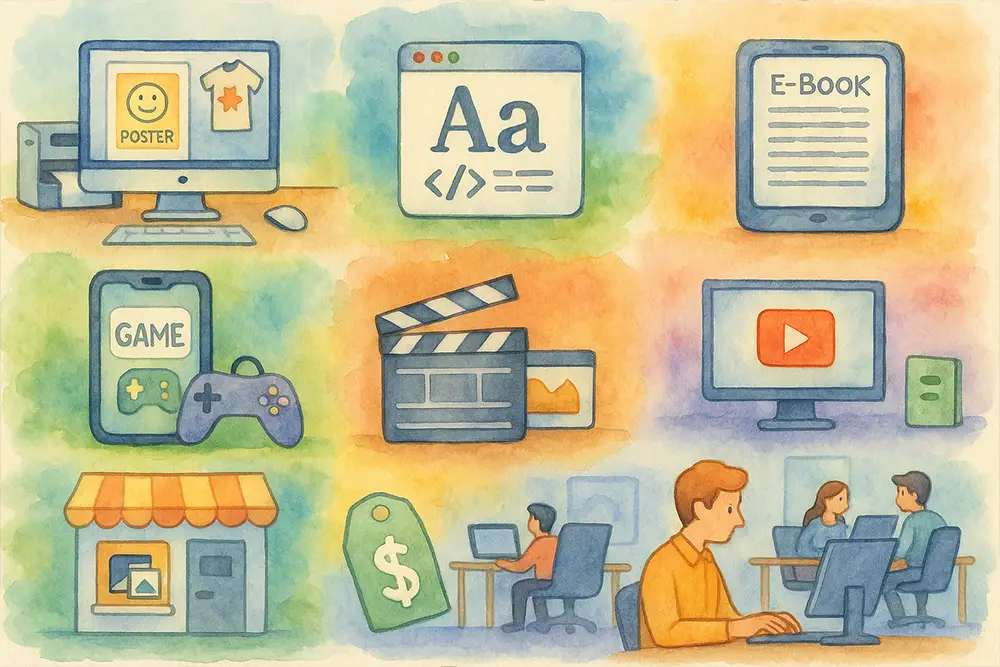
Here are the most common types of font licenses:
1. Desktop License
- Allows use for print materials: posters, logos, T-shirts, packaging.
- Limited to a certain number of computers.
2. Webfont License
- For embedding fonts on websites.
- Usually priced by monthly page views or number of domains.
3. E-Pub License
- For embedding fonts in eBooks, PDFs, or digital magazines.
- Suitable for authors and publishers.
4. App/Game License
- Use within mobile apps or games.
- Covers UI elements and in-app typography.
5. Broadcast License
- For fonts used in videos, ads, TV, or movie titles.
- Required for YouTube thumbnails or cinematic trailers.
6. Extended License
- Includes usage for digital products, templates, and resale.
- Often covers unlimited usage.
7. Corporate License
- Covers multi-user and multi-device installations.
- Suitable for design teams or agency-wide use.
Also Read: Font License of Figuree Studio
Why You Shouldn’t Use Fonts Without a License
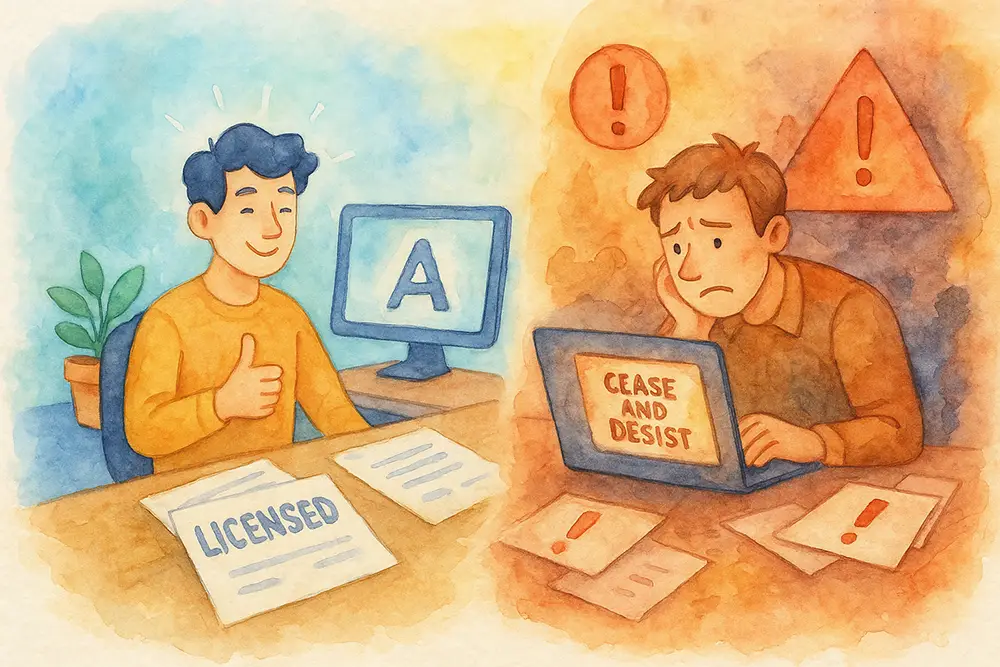
Using unlicensed fonts is essentially copyright infringement. Consequences can include:
- Hefty fines (up to thousands of dollars per use)
- Project delays due to cease-and-desist letters
- Brand damage and loss of trust
Always read the license agreement before using a font—especially in client or commercial work.
“Good design is good business.” — Thomas J. Watson, IBM
How to Choose the Right License for Your Project
Ask yourself:
- Will the font be used in print or digital?
- Is it for personal or commercial use?
- Will the font be embedded in a website, app, or product?
- How many users or devices need access?
Once you answer these, you can determine the right license.
Also Read: Font Licensing Made Easy for Client Projects
Real Example from Figuree Studio
At Figuree Studio, we’ve worked with clients ranging from solo creators to marketing agencies. One client needed our Death Markers font for use in a server-based template platform. Because the font would be rendered and served through a digital product generator, we recommended the Server License.
Meanwhile, two global brands opted for the Corporate License to meet their large-scale needs. Honda Vietnam used the license for a nationwide rebranding campaign using our fonts across digital, print, and television media. Meanwhile, Printsfield from Poland integrated our fonts into their internal product customization systems and marketing collaterals.—giving them broad usage rights and peace of mind.
Want to explore our font collections? Visit our full catalog and filter by license type.

Tips to Stay License-Compliant
- Always keep a copy of your license agreement.
- Avoid free font sites with unclear usage rights.
- Read terms carefully, especially for marketplace purchases.
- Upgrade your license as needed when project scope changes.
Where to Get Licensed Fonts
Here are trusted sources for licensed fonts:
Always download from credible platforms to ensure your license is valid.
Final Thoughts
Understanding font licensing is not just for lawyers or big companies—it’s essential for every designer, freelancer, and creative professional. It protects you, your clients, and your brand.
So the next time you pick a font, ask: Do I have the license to use this?
Explore professionally licensed fonts on Figuree Studio, and design with confidence.