Introduction: Why Font Licensing Matters
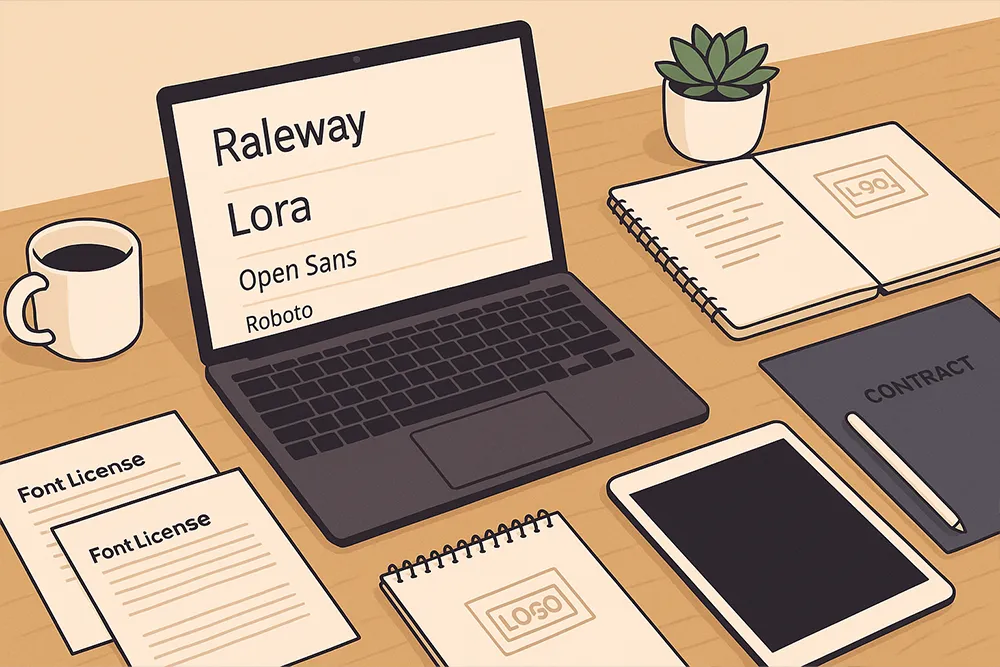
When working on a design project for a client, typography often plays a central role in bringing a brand to life. But here’s a detail many designers overlook: font licensing. Just because you downloaded or purchased a font doesn’t mean you—or your client—can use it however you want.
Table of Contents
- Introduction: Why Font Licensing Matters
- Understanding Font Licensing Basics
- Common Types of Font Licenses
- Who Should Own the License—You or the Client?
- Two Best Practices:
- When a Basic License Isn’t Enough
- How to Explain Font Licensing to Clients
- Real-Life Scenarios & What License They Need
- Why Corporate Licenses Are Worth the Investment
- How to Upsell a Corporate License (Tactfully)
- Bonus: Use Licensed Fonts That Scale
- 🔤 Byte Sharp by Figuree Studio
- Final Thoughts: Licensing as a Professional Standard
Improper font use can lead to legal trouble or financial loss, especially in commercial projects. This guide will walk you through everything you need to know about licensing fonts for client work and how to upsell extended or corporate licenses when necessary.
Understanding Font Licensing Basics
A font isn’t just a design asset—it’s software. When you acquire a font, you’re not buying the font itself but a license to use it under certain conditions.
Common Types of Font Licenses
- Desktop License: For static designs like logos, posters, and packaging.
- Webfont License: Allows fonts to be embedded in websites via CSS.
- App/Software License: For fonts used inside apps or games.
- E-pub License: Suitable for embedding fonts in eBooks or PDFs.
- Broadcast License: Needed for TV or movie titles, streaming content, etc.
Each license has specific terms, such as the number of users, allowed projects, or impressions. Always read the EULA (End-User License Agreement) to understand what’s permitted.
📌 Tip: This article by Monotype provides a deeper breakdown of licensing types.
Who Should Own the License—You or the Client?
This is a common dilemma. In most cases, the end user should hold the license, especially if the client will continue using the design long after your involvement ends.
Two Best Practices:
- Client Purchases the Font: You provide the link and guide them on the correct license.
- You Purchase on Their Behalf (Reimbursed): With clear documentation and permission, you acquire the font and invoice the client.
Whichever route you take, make sure the license terms allow third-party usage if you’re working on behalf of someone else.
When a Basic License Isn’t Enough
Most clients assume a font license is one-size-fits-all. That’s far from the truth.
Imagine a startup using your logo design with a standard desktop license on their website, ads, and app UI. That’s a clear violation of the license.
You should upsell extended or corporate licensing if:
- The project is for a large brand or multinational company.
- The font will be used in multiple media (web, app, print).
- The client has more than one designer or agency using the font.
- The project is expected to reach millions of users or impressions.
This is where you offer value and protect your client.
How to Explain Font Licensing to Clients

Clients may not care about font licensing—until they’re sued. Your role is to educate without overwhelming.
Try this:
“Just like photos, fonts come with usage rights. For your brand’s usage across print, web, and app, a standard license won’t cover everything. I recommend a corporate license to ensure you’re fully protected.”
Keep it simple, legal-sounding, and client-focused.
Real-Life Scenarios & What License They Need
| Scenario | Font Usage | Required License |
|---|---|---|
| Logo + Stationery | Static design | Desktop |
| Website (live text) | Embedded fonts | Webfont |
| Mobile App UI | Fonts in app build | App License |
| Company-wide usage | Multi-user/agency | Corporate/Extended |
| Ads with wide reach | Mass distribution | Extended |
Why Corporate Licenses Are Worth the Investment
A corporate license may cost more upfront, but it offers long-term peace of mind. It:
- Covers unlimited users in the company.
- Grants broader usage rights across media.
- Avoids the need to re-license as the brand grows.
👉 On FigureeStudio.com, most fonts offer a corporate license option starting from $249. Compared to potential fines or redesign costs, it’s a smart investment.
How to Upsell a Corporate License (Tactfully)
If you’re a designer or agency, here’s how you can include licensing as part of your upsell strategy:
- Bundle Licensing in Proposals: Add font license tiers to your pricing.
- Create a Font Licensing Checklist: Show what’s covered under each license.
- Offer to Handle Licensing: Take the hassle off their plate (with a small service fee).
- Include License Education in Deliverables: Send a PDF or link to your site explaining proper usage.
You don’t have to sound like a lawyer—just a smart, responsible designer.
Bonus: Use Licensed Fonts That Scale
When working with versatile fonts, scalability across various platforms is crucial. Some fonts are designed to support web, app, print, and multi-language usage out of the box.
We recommend checking out:
🔤 Byte Sharp by Figuree Studio
A futuristic techno font with multi-platform licensing. Great for apps, gaming UI, or streaming brands.

Final Thoughts: Licensing as a Professional Standard
Font licensing isn’t just a legal technicality—it’s part of your professional responsibility. Educating your clients and offering the right licensing options demonstrates your commitment to the integrity and longevity of your brand.
Next Steps:
- Review the font licenses for your next client project.
- Bookmark this article for future reference.
- Explore corporate license-ready fonts on FigureeStudio.com.